Sizing
What Size Dumpster Do I Need? A Danbury, CT Guide
The 20 yard is our most requested size. How to choose between 10, 15, 20, 30 and 40 yards by volume, weight and driveway space around Danbury.
Guidelines · 8 min read
Most of what comes out of a house or a job site can go in a roll-off. The exceptions are the items Connecticut keeps out of the waste stream, the ones facilities refuse, and the few we do not take, and each of them has somewhere else to go.
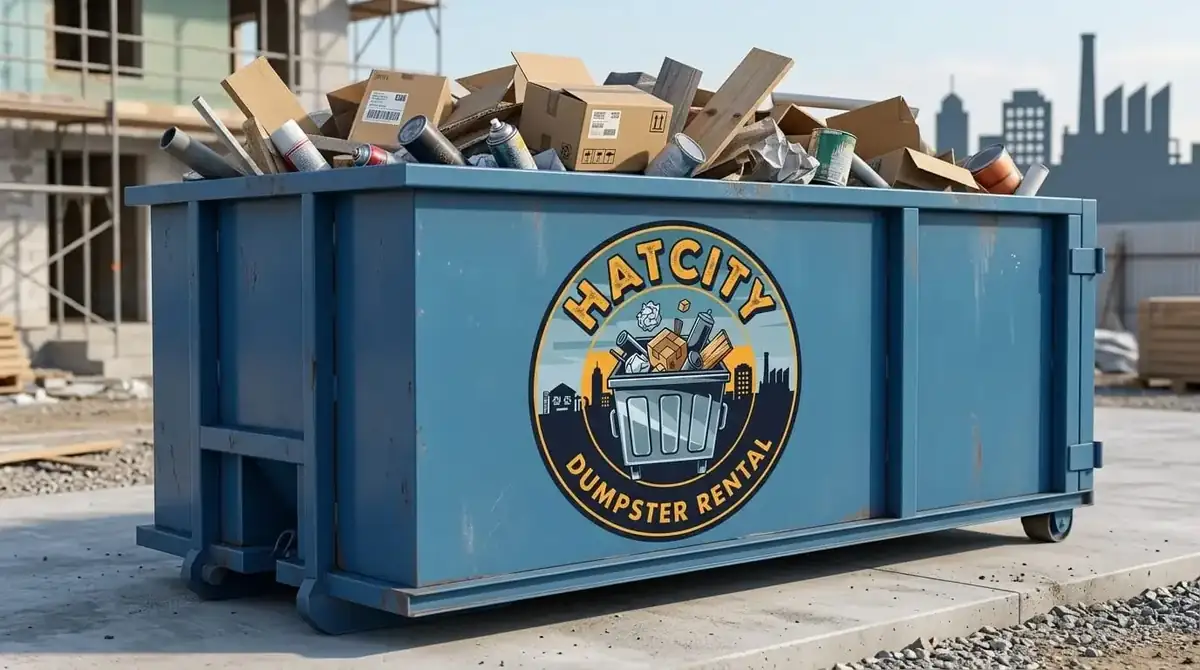
Sorting pays. Light household debris can usually be mixed, but heavy materials such as concrete, dirt or roofing shingles should often be kept separate to stay inside the weight limit, and yard waste should be kept separate from household trash or construction debris. Tell us which you have when you book, and if you have questions about a specific material, ask before delivery.
Connecticut has two disposal rules that matter for a roll-off, and both items are on our no list anyway:
| Item | The rule | What to do instead |
|---|---|---|
| Used batteries (car, truck and boat batteries) | "No person may place a used battery in mixed municipal solid waste or discard or otherwise dispose of such a used battery except by delivery to" a retailer or wholesaler, a recycling facility, a secondary lead smelter, a scrap metal processor or a municipally established collection site (CGS § 22a-256g(a)) | Take it back where batteries are sold, or to a recycling facility or a town collection site |
| Covered electronic devices: desktop and laptop computers, monitors and TVs | "No person shall knowingly place a covered electronic device or any of the components or subassemblies of such device in any solid waste facility" (CGS § 22a-636; devices defined in § 22a-629(5)). The statute says a solid waste facility here does not include transfer stations. | The options on HRRA's e-waste, mattress and paint page, or our junk removal service, which sends electronics through approved programs |
Three common myths. We found no Connecticut statute banning mattresses, paint or tires from the trash, so we do not tell you there is one. The state does run programs for them: HRRA notes that Public Act 13-42 set up a mattress program with free drop-off, and Public Act 11-24 set up the paint stewardship program. Facilities set their own rules too: HRRA's transfer-station rules list tires, asbestos, pressurized containers, liquid waste and hazardous waste as unacceptable waste. That is a facility rule, not a state law, but it is why those items stay out of our boxes.
Our own no list, as company policy: paints, solvents and automotive fluids; oil and fuel; batteries and electronics; propane tanks and fuel containers; tires; medical waste; asbestos; hazardous chemicals; and refrigerants, which means fridges, freezers and AC units stay out. For a yard waste box, keep out household trash and construction debris too. If you are unsure about something, call (475) 256-5131 before you load it; it is far cheaper than finding out at the facility.
Hazardous waste has its own state rule: HRRA notes that under CGS § 22a-454, no one may collect, store or treat hazardous waste material without a permit from CT DEEP. Mattresses are fine in our boxes, though they are bulky, so allow for the space; HRRA's free mattress drop-off is there if you would rather recycle one. And do not mix dirt, rock or concrete in with household junk without checking first, because the weight limits apply.
| Item | What to do with it |
|---|---|
| Paint | HRRA lists paint under household hazardous waste, and its e-waste, mattress and paint page covers the state paint stewardship program (Public Act 11-24). Check that page for current options. |
| Solvents, cleaners, pesticides and other household chemicals | Ask your town or HRRA where household hazardous waste goes. Southbury's household hazardous waste is handled through NVCOG. |
| Car, truck and boat batteries | Back to a battery retailer or wholesaler, a recycling facility or a municipally established collection site (CGS § 22a-256g(a)). |
| Tires | Not in the box. Bridgewater's town facility accepts up to six tires at a time per month from residents, with no fee; elsewhere, ask your town. |
| Propane tanks and fuel containers | On our no list. Keep them out of the box. |
| Fridges, freezers and AC units | Our junk removal service removes refrigerators and other appliances. |
| TVs, computers and monitors | The options on HRRA's e-waste, mattress and paint page, or our junk removal service, which sends electronics through approved programs. |
| Asbestos-containing materials | Never in our boxes. See the DPH note below. |
| Leaves, grass and brush only | A yard waste dumpster, or for Danbury residents the City's bi-annual Leaf Pick Up Program and the public yard waste centre on Plumtrees Road; Brookfield residents have the Yard Refuse Disposal Center on Pocono Rd (Saturdays, free permit). |
Check the drop-off's own list before you go: town stations are for their own residents, with permits, and most take little or no construction debris.
The CT Department of Public Health's Asbestos Program says: "All facilities from sheds to commercial establishments are covered under the Regulations of Connecticut State Agencies asbestos regulations." DPH also notes that federal notification applies to renovations at set thresholds "and for all demolitions, even when there is no asbestos present". DPH's abatement notice and an older DEEP renovation and demolition checklist give different timings, so check the current rule with DPH, (860) 509-7367, before the work starts.
That older DEEP checklist also says that before demolition, asbestos-containing material and, where an environmental survey shows it is needed, lead-based paint should be removed and properly disposed of. HRRA's definition of construction and demolition waste excludes asbestos, clean fill, radioactive material and hazardous waste. Asbestos never goes in our roll-offs. If an older home may have it, have it checked before the tear-out starts.
Connecticut law says: "No vehicle shall be driven or moved on any highway unless such vehicle is so constructed or loaded as to prevent any of its load from dropping, sifting, leaking or otherwise escaping therefrom in such manner or quantity as to constitute a hazard or nuisance to other users of the highway" (CGS § 14-271(a)). For refuse trucks of 5,000 pounds or more carrying an open-top container, § 14-271(c) requires the contents to be secured with a screen or other material with openings no larger than two square inches. Towns add their own: Danbury requires every truck to be loaded so nothing is blown or deposited on any street (§ 36-80(c)), and Roxbury says: "All vehicles shall have canvas or other suitable covers" (§ 11-9(A)).
That is why the fill line matters. Debris must remain level with or below the top rim, because overfilled dumpsters cannot be transported safely. And keep debris inside the box: Bethel's dumpster chapter says a container must not be loaded so its contents spill into the street or sidewalk (§ 52-3).
It pays to sort. A clean load of concrete, brick, stone or asphalt is the easiest to recycle and belongs in a smaller bin, inside the weight limit. Mixed remodel and tear-out debris is construction and demolition waste. Yard waste is best as its own load, kept separate from household trash or construction debris, and goes to green waste recycling where possible. Household junk from a cleanout is a fourth kind, and the one most likely to hide a car battery, a propane tank or a can of paint.
So keep brush and leaves in their own load, keep heavy concrete and brick apart from everything else, keep metal and cardboard together, and do not mix a household cleanout into a remodel box without telling us. Whenever possible, materials such as concrete, metal and wood are separated for recycling. If you are not sure where something belongs, call before you load it.
From this guide
Not covered here? Call (475) 256-5131 and ask.
Yes. Mattresses can go in with furniture and household junk; we found no state ban. They are bulky, so allow for the space. HRRA also notes a free mattress drop-off program if you would rather recycle one.
No. Connecticut law keeps used batteries out of mixed municipal solid waste, and both batteries and tires are on our no list. Take batteries back to a retailer, a recycling facility or a town collection site.
No. Connecticut bars knowingly placing covered electronic devices such as computers, monitors and TVs in a solid waste facility, and electronics are on our no list. Use the options on HRRA's e-waste page or our junk removal service.
Keep them out; paints, solvents, automotive fluids and hazardous chemicals are on our no list. HRRA lists paint under household hazardous waste; ask your town or HRRA where to take it.
Keep reading
The rest of the series, same approach — official sources, no filler.
Sizing
The 20 yard is our most requested size. How to choose between 10, 15, 20, 30 and 40 yards by volume, weight and driveway space around Danbury.
Cost
Danbury dumpster rentals typically run $295 to $695. What a flat-rate quote covers, what moves the price and the extra costs worth knowing.
Guide
Everything in one place: how a roll-off rental works in Danbury, sizes and weights, placement and permits, hauling rules and loads.
Ready when you are
Call (475) 256-5131 with the address and what is going in. A quote and a delivery window before you hang up.